How to Tell a Real Yoga Mat Factory from a Converter or Trader: Equipment Checklist by Material
A real yoga mat factory owns the machines that turn raw material into foam and sheets. For TPE that means foaming extrusion and calendering; for natural rubber it means mixing, calendering, foaming and vulcanization. A converter only cuts and prints bought-in sheets, and a trader owns no production equipment at all.
This guide takes the equipment angle: which machines and process steps each material needs, and how to check them. For the general vetting sequence (red flags, payment terms, inspection) read How to vet a Chinese yoga mat factory. For a shortlist by region read Top 12 yoga mat manufacturers in China.
What is the difference between an S-, A-, B- and C-level yoga mat supplier?
Buyers often grade suppliers in four tiers by how much of the process they own.
| Tier | Definition | What you see on a video call |
|---|---|---|
| S — full-process factory | Mixes raw materials, foams or vulcanizes, makes sheets, laminates and finishes in-house for the material you order. | Running foaming / vulcanization line on video; raw material in bags; batch records. |
| A — core in-house | Runs the core steps (foaming, sheet making) in-house but outsources some steps, such as lamination, printing or packaging. | Running foaming line; supplier discloses which steps are outsourced. |
| B — converter | Buys semi-finished foam or sheets and only cuts, prints, engraves and packs them. | Cutting and printing tables, no foaming equipment; sheets arrive from outside. |
| C — trader | Owns no production equipment. Resells mats made by other factories. | Showroom or office only; video calls avoid the floor; licence scope is trading. |
An S-level supplier controls formulation, density and cure, so it can fix a defect at the source. A B-level converter can only reject a bad sheet and reorder. A C-level trader depends on another factory for every answer.
How do buyers score a yoga mat factory?
One practical model weights eight criteria out of 100 points. Equipment and real manufacturing carry almost half the score.
| Criterion | Points |
|---|---|
| Production equipment and lines | 25 |
| Real manufacturing of TPE / PU / natural rubber | 20 |
| Factory authenticity: licence, plant, workshop, equipment, staff | 15 |
| Export experience | 10 |
| QC and certification | 10 |
| R&D and customization | 10 |
| Scale | 5 |
| Supply-chain transparency | 5 |
| Total | 100 |
What equipment does a yoga mat factory need for each material?
The machines differ by material. The right-hand column lists the steps that must be in-house for an S-level rating.
| Material | Core machines | Must be in-house for S-level |
|---|---|---|
| TPE | Mixing / compounding equipment, foaming extruder, calender or laminating rolls, cooling line, cutting machine | Mixing, extrusion with foaming, calendering, cutting |
| Natural rubber | Internal mixer (Banbury), open mill, calender, continuous foaming and vulcanization line or foaming presses, slicing and cutting machines | Mixing, calendering, foaming, vulcanization, cutting |
| PU + natural rubber | Full natural rubber line (above) for the base, PU top-layer processing, hot press or adhesive laminating line, surface treatment, laser engraver | Rubber base production, PU top layer, lamination |
| Finishing (all materials) | Screen printer, digital / UV printer, laser engraver, automatic cutter, roll packing | Can be in-house or disclosed partners; core steps above decide the tier |
What equipment does a TPE yoga mat factory need?
TPE mats start as pellets. A TPE factory mixes the compound, extrudes and foams it into a continuous sheet, calenders it to thickness and texture, then cuts it. A supplier without a foaming extruder is buying TPE sheet from someone else.
What equipment does a natural rubber yoga mat factory need?
Natural rubber is mixed in an internal mixer (Banbury) and worked on an open mill. It is then calendered into sheet, foamed and vulcanized, either on a continuous line or in heated presses, and cut. Vulcanization is what turns raw rubber into a stable mat.
What equipment does a PU/rubber yoga mat factory need?
A PU/rubber mat is a natural rubber base with a polyurethane top layer. The factory needs the full rubber line plus PU top-layer processing and a hot-press or adhesive laminating line. Laser engraving is commonly used for alignment lines and logos.
Which steps can a supplier outsource without misleading you?
Printing, packaging and non-mat accessories are often made by partner workshops. That is normal if the supplier says so. Foaming, vulcanization and sheet making are the core steps; if those are bought in, the supplier is a converter. Ask for a written list of in-house and outsourced steps for your exact item.
How do you verify a factory’s equipment on a video call?
- Book the call at short notice and ask for the camera to move continuously.
- Ask to see the foaming or vulcanization line for your material running, not idle.
- Ask to see raw material in bags or bales next to the line.
- Ask for a batch or job card and match it to the product on the line.
- Ask to see the finishing area: cutting, printing, engraving, packing.
- Ask the caller to walk outside and show the building and gate.
- Compare the company name on the business licence with the name on test reports and the contract.
How do you check a REACH or RoHS report matches your mat?
A test report covers only the sample that was tested. Check four things: product, material, model and date. A TPE report does not cover a PU/rubber mat.
RoHS
Directive 2011/65/EU (RoHS 2) restricts hazardous substances in electrical and electronic equipment.[1] Its Annex II lists substances such as lead, mercury, cadmium, hexavalent chromium, PBB and PBDE.[1] A yoga mat is not electrical equipment, so a RoHS test on a mat is a substance screening, not proof of a legal RoHS obligation.
REACH and SVHC
ECHA publishes the Candidate List of substances of very high concern (SVHC) under the REACH Regulation.[2] ECHA notes that inclusion on the list can create immediate legal obligations, in particular under Articles 7, 31 and 33 of REACH.[2] The list is updated over time, so an SVHC test should state which version of the list it screened against.
California Proposition 65
Proposition 65 requires businesses to inform Californians about exposures to listed chemicals, and the state maintains and updates that list.[3] A Prop 65 report should name the chemicals tested and the exact product.
CE marking
EU law defines CE marking as the manufacturer’s indication that a product conforms with Union harmonisation legislation that provides for its affixing.[1] If a supplier shows a “CE certificate” for a plain yoga mat, ask which directive or regulation it was issued under.
ISO 9001
ISO 9001 certifies a quality management system, not a product. ISO 9001:2015 has been revised by ISO 9001:2026; ISO advises organisations certified to the 2015 edition to consult their certification body on transition.[4] Check the certificate holder’s name, scope, certification body and expiry date.
Example: SANFAN against this checklist
SANFAN (FUJIAN SANFAN Sports Products Co., Ltd., Jinjiang, Fujian, founded 2013) runs TPE, natural rubber and PU/rubber lines in-house, including foaming, calendering, lamination and finishing. It operates three owned plants with 6 foaming machines and 10 production lines.
| Check | SANFAN |
|---|---|
| TPE foaming and calendering in-house | Yes |
| Rubber mixing, foaming and vulcanization in-house | Yes |
| PU/rubber lamination in-house | Yes |
| Printing, laser engraving, cutting, packing in-house | Yes |
| ISO 9001:2015 | Certified, valid to June 2028 |
| Live video walkthrough | Available on request |
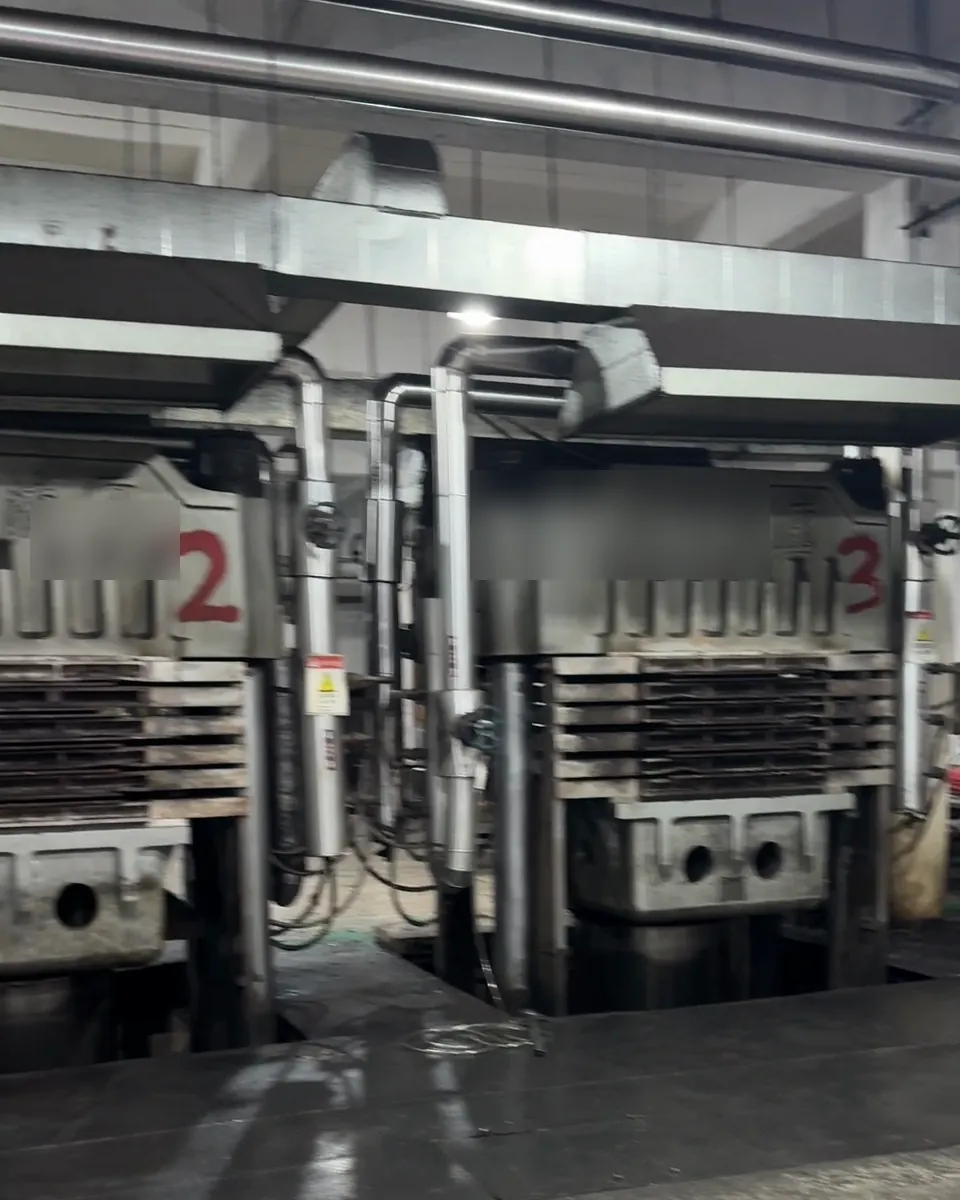
See the full evidence, footage and certificate list: SANFAN factory capabilities & audit checklist.
FAQ
What is the difference between a yoga mat factory and a trader?
A factory owns the equipment that turns raw materials into foam, sheets and finished mats. A trader owns no production equipment and resells mats made elsewhere. A converter sits in between: it buys foam or sheets and only cuts, prints and packs them.
What makes a yoga mat supplier S-level?
An S-level supplier runs the full process in-house for the material you order: raw-material mixing, foaming or vulcanization, sheet making, lamination where needed, finishing and QC. Core steps are visible on a live video call.
Which yoga mat production step should never be outsourced by a real factory?
Foaming (for TPE) or mixing, foaming and vulcanization (for natural rubber) are the core steps. A supplier that buys finished foam or sheets is a converter, not a full-process factory.
Does a RoHS test report make a yoga mat RoHS-compliant?
Directive 2011/65/EU applies to electrical and electronic equipment. A RoHS test on a yoga mat is a substance screening that shows restricted substances were below the limits in the sample tested. Check that the report names your material, model and a recent date.
Should a yoga mat carry a CE mark?
CE marking is for products covered by EU harmonisation legislation that provides for it. If a supplier shows a CE certificate for a plain yoga mat, ask which directive or regulation it is issued under.
How do I verify a factory's equipment remotely?
Ask for an unscheduled live video call. Ask them to show the running foaming line for your material, raw material bags, a batch or job card, and the finishing area, and to point the camera at the plant exterior and address.